Custodians of Institutional Authority
The Sovereign Order of Continuity is governed through custodial leadership, carried in trust across generations.
Its leadership does not derive authority from position, but from responsibility — to preserve continuity, safeguard lawful inheritance, and ensure that sovereignty, identity, and governance endure beyond any single lifetime.
Each office within the Order exists as a trust held on behalf of past, present, and future generations.
Authority is not possessed.
It is carried.
Office of the Sovereign Head and First Lady
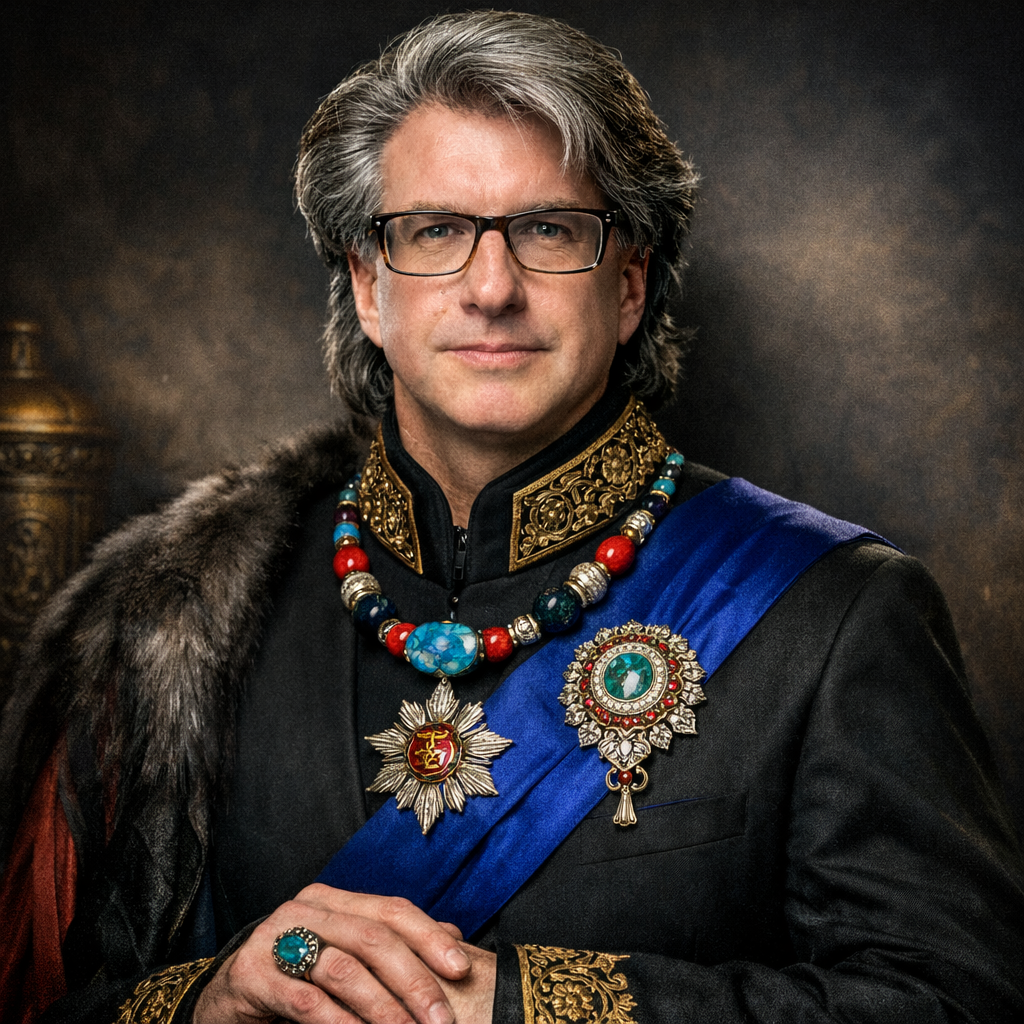
His Majesty Grand Chief Donald DuVal Middleton
Sovereign Head and Founder-Custodian
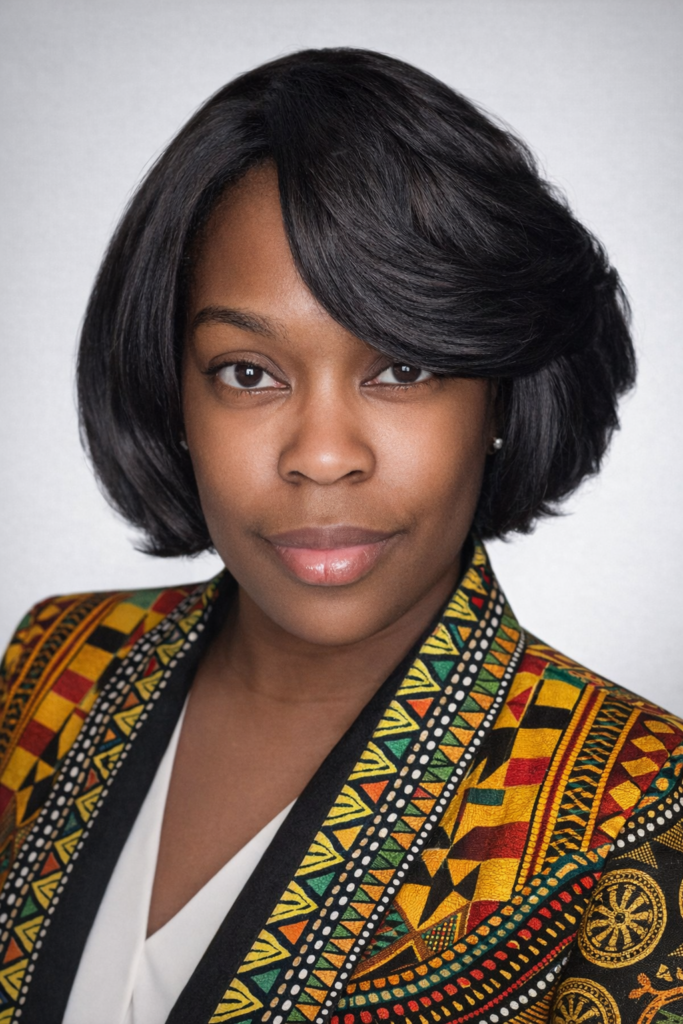
Her Ladyship Swinton
First Lady and Director of Institutional Development
Together, they serve as the central custodial leadership of the Sovereign Order of Continuity, guiding its mandate through both authority and implementation.
Custodial Leadership
His Majesty Grand Chief Donald DuVal Middleton serves as the Sovereign Head and Founder-Custodian of the Sovereign Order of Continuity, a permanent international institution dedicated to the preservation and lawful transmission of Indigenous, dynastic, ecclesiastical, and civilizational continuity across generations.
His authority is grounded first in Indigenous treaty-based sovereignty and kinship law, carried through the Hunnic Matinecock Tribal Nation, Royal House of Alarune and extends through converging sovereign traditions carried by lineal descent — including the Churchill and Herbert dynastic lines of Europe, and through the Travis/Travers line associated with early American governance and continuity— alongside Asian imperial and Inner Eurasian traditions, Norse and ancestral European societies, African kinship institutions, customary and communal law systems, and ecclesiastical and sacred orders.
In his custodial role, he is responsible for safeguarding the Doctrine, Charter, and institutional integrity of the Order, ensuring the continuity of lawful authority, intergenerational governance, and ancestral responsibility.
His leadership is defined not by possession of authority, but by stewardship — maintaining continuity where sovereign traditions, nations, and houses intersect.
His work operates at the intersection of ancestral law and modern systems, advancing institutional frameworks that preserve identity, governance, and treaty continuity within contemporary global structures.
As Sovereign Head, he serves as trustee of continuity across generations, ensuring that inherited sovereignty is neither diminished nor fragmented, but carried forward in accordance with law, tradition, and duty.
Institutional Development and Stewardship
Her Ladyship Swinton serves as First Lady and Director of Institutional Development, holding a central role in the operational realization of the Order’s mandate.
Working in alignment with the Sovereign Head, she advances the institutional structure of the Order through strategic development, inter-institutional coordination, and the cultivation of enduring partnerships.
Her work focuses on ensuring that continuity is not only preserved in principle, but implemented in practice — across education, cultural initiatives, diplomatic engagement, and continuity-aligned development within modern systems.
Her role reflects a dual function of stewardship and advancement, ensuring that the Order’s presence remains both faithful to ancestral law and effective within contemporary global structures.
Continuity of Leadership
Leadership within the Sovereign Order of Continuity is not limited to individuals, but structured as an enduring framework.
Additional offices may include:
- Members of the Council of Continuity
- Custodians of institutional divisions
- Representatives of allied sovereign institutions
- Officers entrusted with specific domains of continuity
All roles are established in accordance with the Charter and operate under custodial responsibility, not personal authority.
Principle of Leadership
The leadership of the Sovereign Order of Continuity is governed by a single principle:
Continuity is entrusted, not claimed.
Each office exists to ensure that sovereignty, responsibility, and identity are preserved and transmitted — not for the present alone, but for generations yet to come.